Rock wool Substrate: The Efficient Choice for Leafy Vegetable Cultivation in Modern Plant Factories Views: 368
With global population growth and arable land reduction, plant factories have become a crucial direction in modern agriculture. In hydroponic cultivation systems, the choice of substrate directly impacts crop growth efficiency, resource utilization, and economic benefits. Among various substrates, rock wool stands out as an ideal choice for high-tech plant factories cultivating leafy vegetables (such as lettuce, spinach, and bok choy) due to its excellent physical properties and ease of management.
Rock wool is a fibrous inorganic substrate made by melting basalt at high temperatures (approximately 1600°C) and spinning it into fibers. It exhibits the following key characteristics:
High porosity (>95%): Provides excellent aeration, promoting root respiration.
Superior water retention: Maintains moisture while preventing waterlogging and root rot.
Chemical inertness: Free of pathogens, suitable for sterile cultivation.
High adaptability: Can be molded into blocks, slabs, or granules to fit different cultivation systems.
These properties make rock wool substrate particularly suitable for short-cycle, high-density leafy vegetable production, aligning with the efficiency and controllability demands of plant factories.
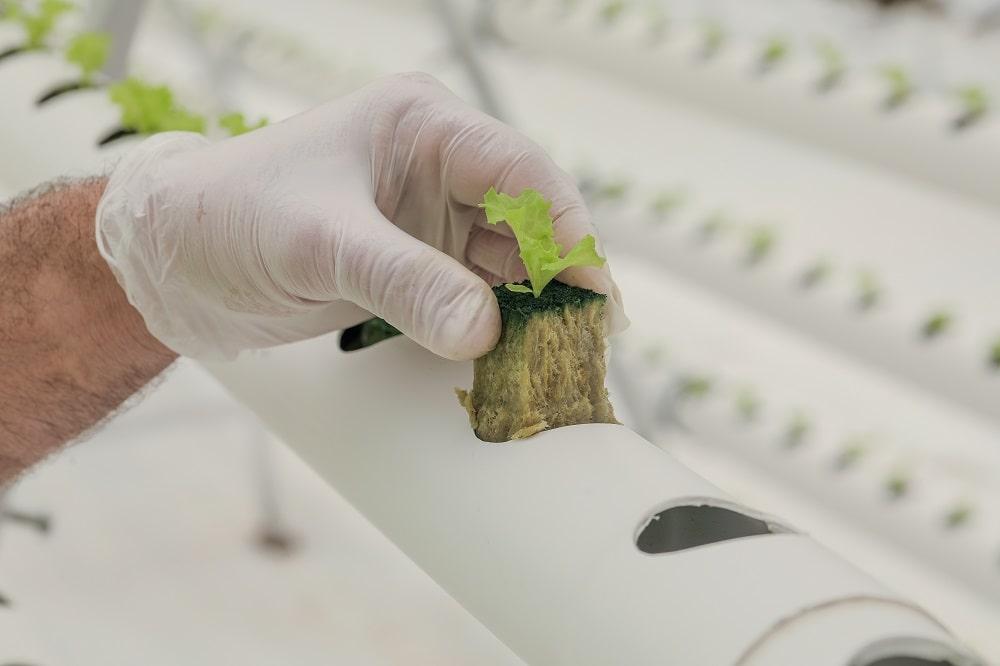
Core Advantages of Rock wool growing media in Leafy Vegetable Cultivation
(1) Precise Water and Nutrient Management for Higher Yield and Quality
In plant factories, precise nutrient solution control is critical. Rock wool’s fibrous structure ensures even distribution of water and nutrients, allowing efficient absorption by roots and minimizing waste. Compared to organic substrates (e.g., coco coir), rockwool’s inert nature prevents interference with the pH and EC of the nutrient solution, facilitating automated precision control. For example:
Lettuce grown in rock wool media can mature in 25-30 days, with thicker leaves and better color.
When combined with ebb-and-flow or drip irrigation systems, water and fertilizer use can be reduced by over 30%.
(2) Sterile Environment, Reducing Disease Risks
Leafy vegetables are susceptible to soil-borne diseases (e.g., root rot, Fusarium wilt), but rock wool grow medium’s sterility significantly minimizes pathogen growth. Additionally:
Supports high-density planting, increasing yield per unit area by 20%-40%.
Can be reused (after sterilization), lowering production costs.
(3) Compatibility with Automated Production for Enhanced Efficiency
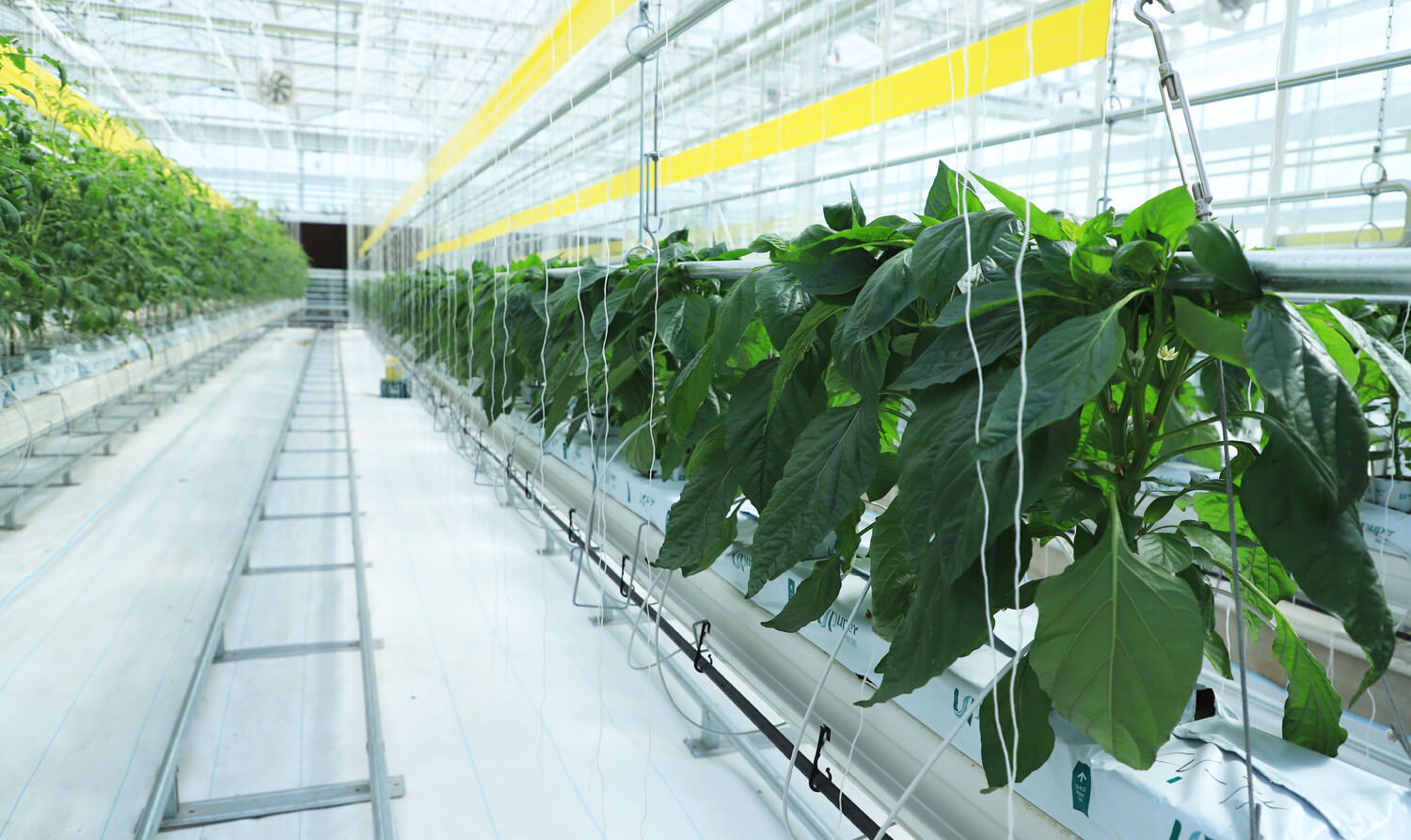
Modern plant factories are moving toward full automation, and rock wool’s standardized forms (e.g., cubes, slabs) make it highly suitable for:
Mechanical transplanting: Seedling cubes can be directly planted, reducing manual labor.
Automated harvesting: The stable structure facilitates robotic harvesting.
In contrast, organic substrates (e.g., coco coir) decompose and deform over time, compromising long-term stability.
(4) High Environmental Controllability for Artificial Light Plant Factories
In fully artificial light plant factories (PFAL), rockwool perfectly complements:
LED supplemental lighting: Rockwool does not absorb light, improving light utilization.
CO₂ enrichment: Its porous structure enhances gas exchange, boosting photosynthesis.
Rock wool vs. Other Substrates
Substrate Type | Advantages | Disadvantages | Best Use Cases |
Rockwool | Excellent water retention/aeration, sterile, automation-friendly | Non-biodegradable, salt accumulation risk | Leafy vegetables, high-precision plant factories |
Coco Coir | Renewable, good buffering capacity | Requires desalination, prone to fungal growth | Organic cultivation, short-cycle crops |
Perlite/Vermiculite | Lightweight, low-cost | Poor water retention, fragile | Seedlings, mixed substrates |
Hydroponics (NFT) | Soilless, high oxygen levels | Reliant on precise control, high disease risk | Leafy greens, herbaceous plants |
Future Outlook: Rock wool Growing Media Remains the Optimal Choice but Requires Sustainable Alternatives
Despite its environmental sustainability challenges, rockwool’s efficiency in industrialized leafy vegetable production remains unmatched. Future developments may include:
Improving rockwool recycling technologies to reduce environmental impact.
In modern plant factories, especially PFAL systems for leafy vegetables, rockwool substrates—with their high water retention, sterile environment, and automation compatibility—stand out as the most efficient and stable cultivation medium. While environmental concerns persist, technological innovations and scientific management ensure rockwool’s dominance as the preferred substrate for industrialized leafy vegetable production. In the future, advancements in biodegradable materials may diversify substrate options, but for now, rockwool remains irreplaceable.






 Return