How Improved Water Retention and Moisture Distribution Benefit Rockwool Growing Media Views: 16
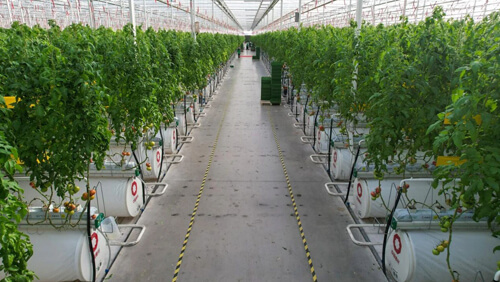
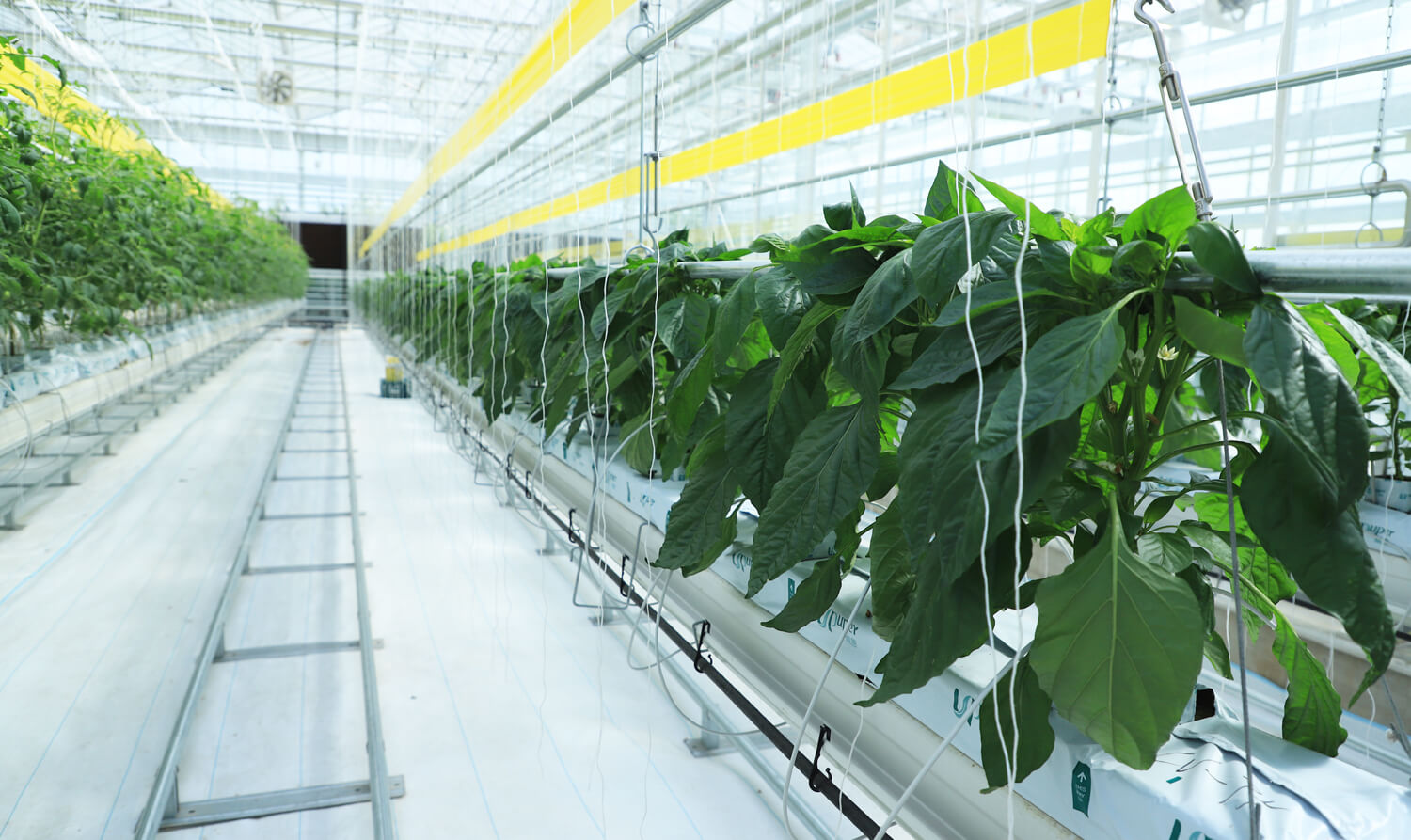
Rockwool growing media have become an important component of modern commercial greenhouse cultivation. Widely used in hydroponic and soilless growing systems, horticultural rockwool provides a controlled physical environment for root development while allowing growers to manage irrigation and nutrient delivery with precision.
However, not all rockwool growing media perform in the same way. Water content, water retention, moisture distribution, and structural strength can all influence how growing blocks and slabs perform throughout a cultivation cycle.
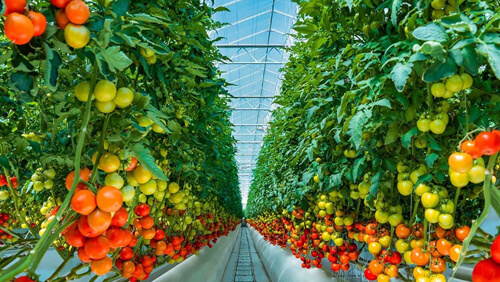
For professional tomato and rose growers, understanding these properties is essential when selecting growing media for a commercial greenhouse.
Recent developments in horticultural rockwool technology have focused on improving these characteristics. UPuper® has upgraded its rockwool growing blocks and slabs to deliver higher net water content, improved water retention, more uniform moisture distribution, and enhanced structural strength.
This article explores why these properties matter and how they can support modern greenhouse cultivation.
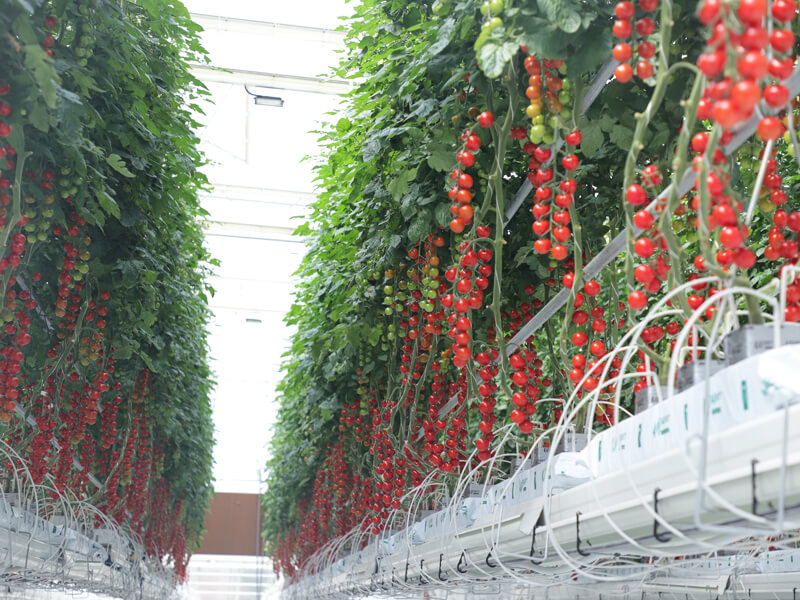
1. Why Water Content Matters in Rockwool Growing Media
Water content is one of the important physical characteristics of horticultural rockwool.
In hydroponic cultivation, plants rely on irrigation systems to deliver water and dissolved nutrients directly to the root zone. The growing media serves as a physical environment that holds and distributes water while maintaining space for air.
The amount of water retained within the growing media influences the moisture conditions around plant roots between irrigation events.
A suitable water-holding capacity can help growers:
· Maintain a more consistent moisture environment around the roots.
· Manage irrigation intervals according to crop requirements.
· Reduce rapid fluctuations in root zone moisture.
· Support more controlled water and nutrient management.
However, higher water content alone does not automatically mean better growing performance. Water availability, air-filled porosity, drainage, irrigation frequency, and the physical structure of the growing media must also be considered.
The objective is to achieve an appropriate balance between water retention and root zone aeration.
UPuper® Growing Block Upgrade: 15% Higher Net Water Content
UPuper® rockwool growing blocks now feature a 15% increase in net water content compared with the previous product specification.
This improvement provides greater water-holding capacity within the growing block, helping create a more stable moisture environment during seedling propagation and early plant development.
For greenhouse tomato growers, maintaining appropriate moisture conditions during the early growth stage is an important part of successful transplant management.
2. How Water Retention Affects Greenhouse Growing
Water retention refers to the ability of growing media to hold water within its structure.
In commercial greenhouses, irrigation management must respond to several changing factors, including:
· Solar radiation and daily light integral.
· Temperature and relative humidity.
· Plant size and transpiration rate.
· Crop growth stage.
· Irrigation frequency and drainage strategy.
When environmental conditions change, the water requirements of plants also change.
Growing media with improved water retention can help maintain moisture between irrigation events. This provides growers with greater flexibility when managing irrigation, although the actual irrigation schedule should always be adjusted according to crop demand and greenhouse conditions.
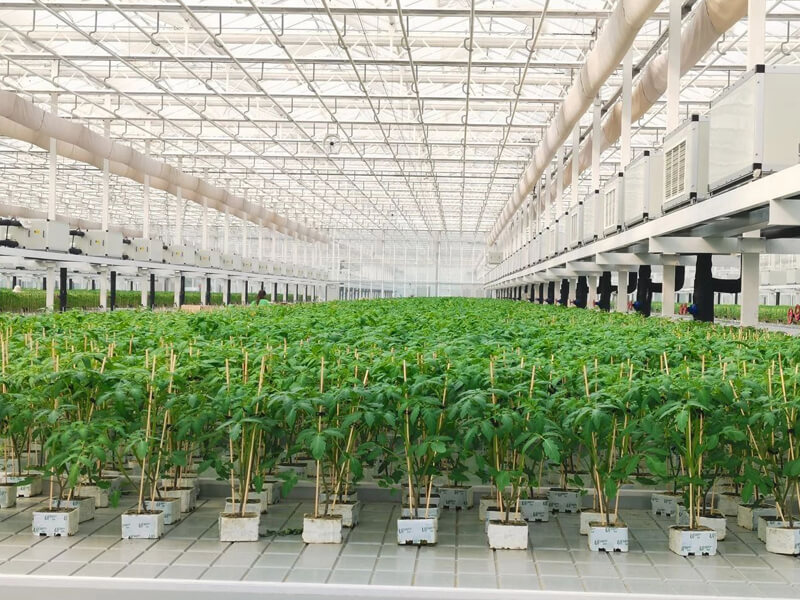
UPuper® Growing Block Upgrade: 50% Better Water Retention
The upgraded UPuper® growing blocks demonstrate a 50% improvement in water retention performance.
Combined with the 15% increase in net water content, this enhancement is designed to improve the water-holding characteristics of the growing blocks.
For professional tomato propagation, these improvements can help growers maintain more manageable moisture conditions around developing roots.
It is important to distinguish water retention performance from net water content: they describe related but different product characteristics, and both contribute to understanding how a growing block manages water.
3. Why Uniform Moisture Distribution Matters in Growing Slabs→
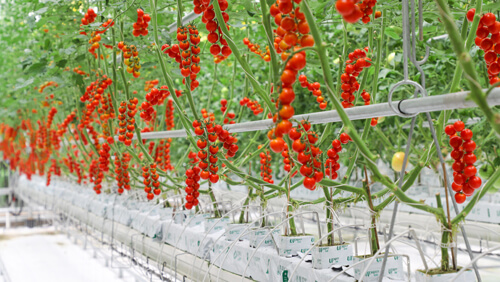
For commercial greenhouse tomato production, rockwool growing slabs provide the main root zone environment after transplanting.
Unlike small propagation blocks, growing slabs accommodate a larger and more developed root system over an extended cultivation period.
Moisture distribution within the slab is therefore an important consideration.
If water is distributed unevenly, different parts of the growing media may experience different moisture conditions. This can influence root zone management and make irrigation control more complicated.
More uniform moisture distribution can help:
· Provide more consistent moisture conditions across different slab layers.
· Improve the predictability of root zone moisture management.
· Support more consistent irrigation management.
· Reduce differences in moisture conditions between the upper and middle layers.
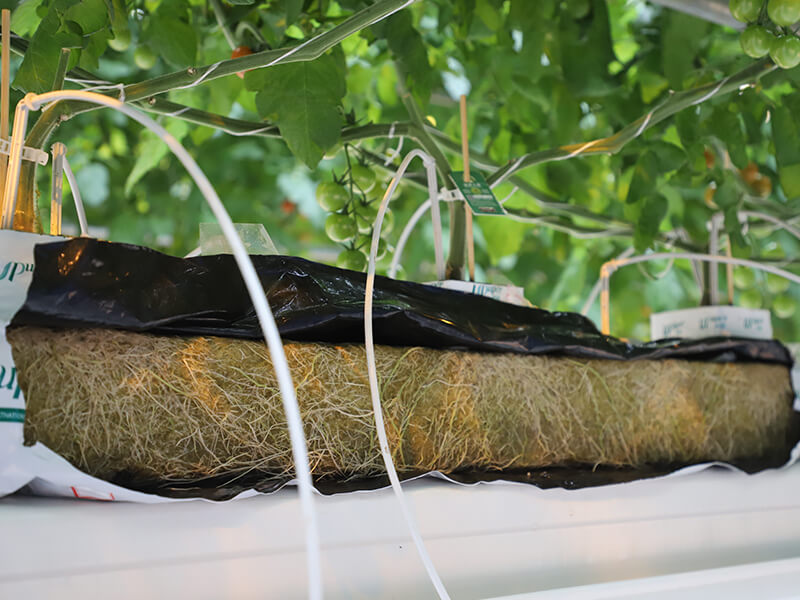
Improved Moisture Distribution in UPuper® Growing Slabs
UPuper® has improved the moisture distribution characteristics of its growing slabs, with more uniform water distribution in the upper and middle layers.
This improvement is particularly relevant to commercial tomato growers who rely on precise irrigation strategies throughout the production cycle.
A more uniform moisture profile can make it easier to manage the growing environment across the slab, although actual performance will also depend on irrigation system design, planting density, drainage, and environmental conditions.
4. Structural Strength: An Important Property for Long-Term Cultivation
Water management is not the only factor influencing the performance of rockwool growing media.
Structural strength is another important characteristic, particularly when growing media must maintain their physical shape during transportation, installation, irrigation, and long-term cultivation.
Growing blocks and slabs are regularly exposed to physical handling and changes in moisture content.
Adequate structural strength can help:
· Maintain the physical integrity of the growing media.
· Reduce unwanted deformation during handling.
· Support stable installation in greenhouse growing systems.
· Maintain the intended shape during cultivation.
Enhanced Structural Strength with UPuper®
UPuper® has improved the structural strength of both its growing blocks and growing slabs.
For tomato growing slabs, structural strength can also be customized according to different cultivation requirements.
This flexibility allows professional growers and distributors to explore growing media specifications that better match their greenhouse systems and application needs.
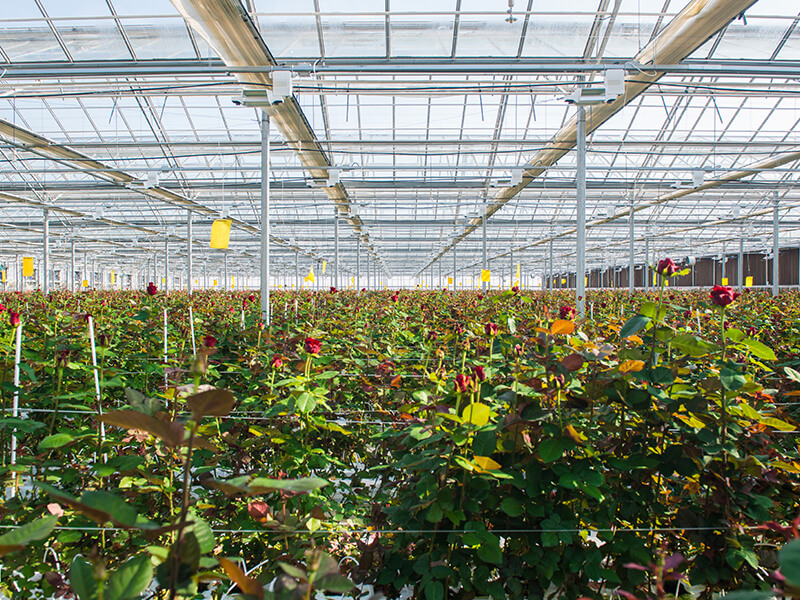
5. Rockwool Growing Slabs for Long-Term Rose Cultivation
Rockwool growing slabs are used in various commercial horticultural applications, including tomato and rose cultivation.
Although these crops have different cultivation requirements, both depend on suitable root zone conditions and reliable growing media performance.
In commercial rose production, growing media durability is particularly important because cultivation systems may operate over extended periods.
UPuper® rockwool growing slabs can achieve growing cycles of 6 years or more in rose cultivation under suitable growing conditions and management practices.
This long-term application potential makes structural stability, water management, and growing media quality important considerations when selecting a substrate for commercial rose greenhouses.
The actual service life will depend on cultivation practices, irrigation management, crop conditions, and greenhouse operations.
6. How to Choose the Right Rockwool Growing Media
When selecting horticultural rockwool for a commercial greenhouse, growers should consider more than just product dimensions and density.
The following characteristics deserve attention:
Water Content and Water Retention
Evaluate the water-holding properties of the growing media according to crop requirements and irrigation strategies.
Moisture Distribution
Consider whether water is distributed consistently throughout the growing media, particularly in larger growing slabs.
Structural Strength
Choose products with suitable structural properties for handling, installation, and the intended cultivation cycle.
Crop-Specific Requirements
Tomatoes and roses have different root development patterns, cultivation durations, and irrigation requirements. Growing media should be selected accordingly.
Customization Options
For large-scale greenhouse operations, customized dimensions and structural specifications can help match the growing media to existing cultivation systems.
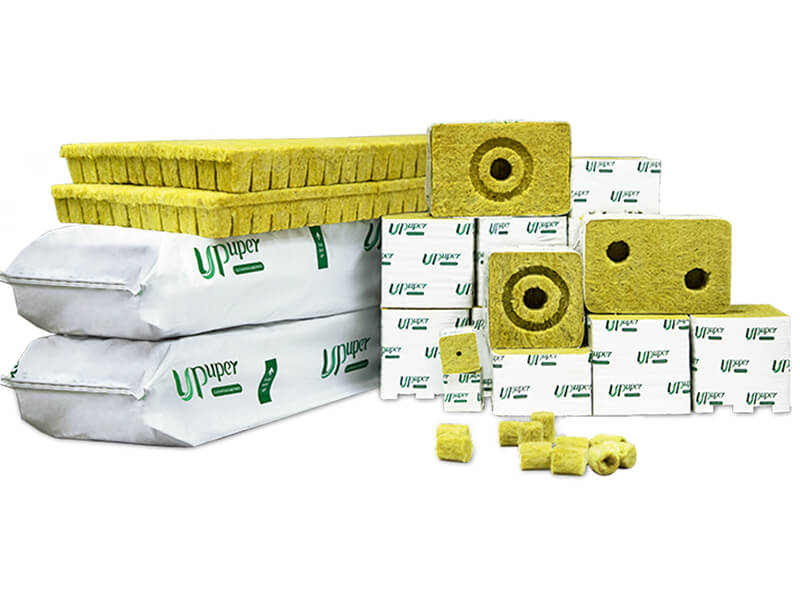
7. UPuper®: Advanced Rockwool Growing Solutions for Commercial Greenhouses
As a horticultural rockwool brand, UPuper® focuses on developing growing media for professional greenhouse cultivation and modern soilless growing systems.
Its upgraded tomato growing product range includes:
UPuper® Growing Blocks→
· 15% higher net water content.
· 50% improvement in water retention performance.
· Enhanced structural strength.
UPuper® Growing Slabs→
· 5% higher net water content.
· More uniform moisture distribution in the upper and middle layers.
· Enhanced structural strength.
· Customizable structural performance for tomato cultivation.
· Growing cycles of 6 years or more for rose cultivation under suitable conditions.
These improvements reflect UPuper®'s commitment to continuous product development and better growing media performance.
For commercial tomato and rose growers looking for reliable hydroponic growing media, choosing the right rockwool product is an important step toward more controlled and efficient greenhouse cultivation.
More Moisture. Better Water Retention. Stronger Structure.
Discover UPuper® horticultural rockwool growing solutions.
Grow Better. Grow with UPuper®.
Website: https://www.upuper.com






 Return